
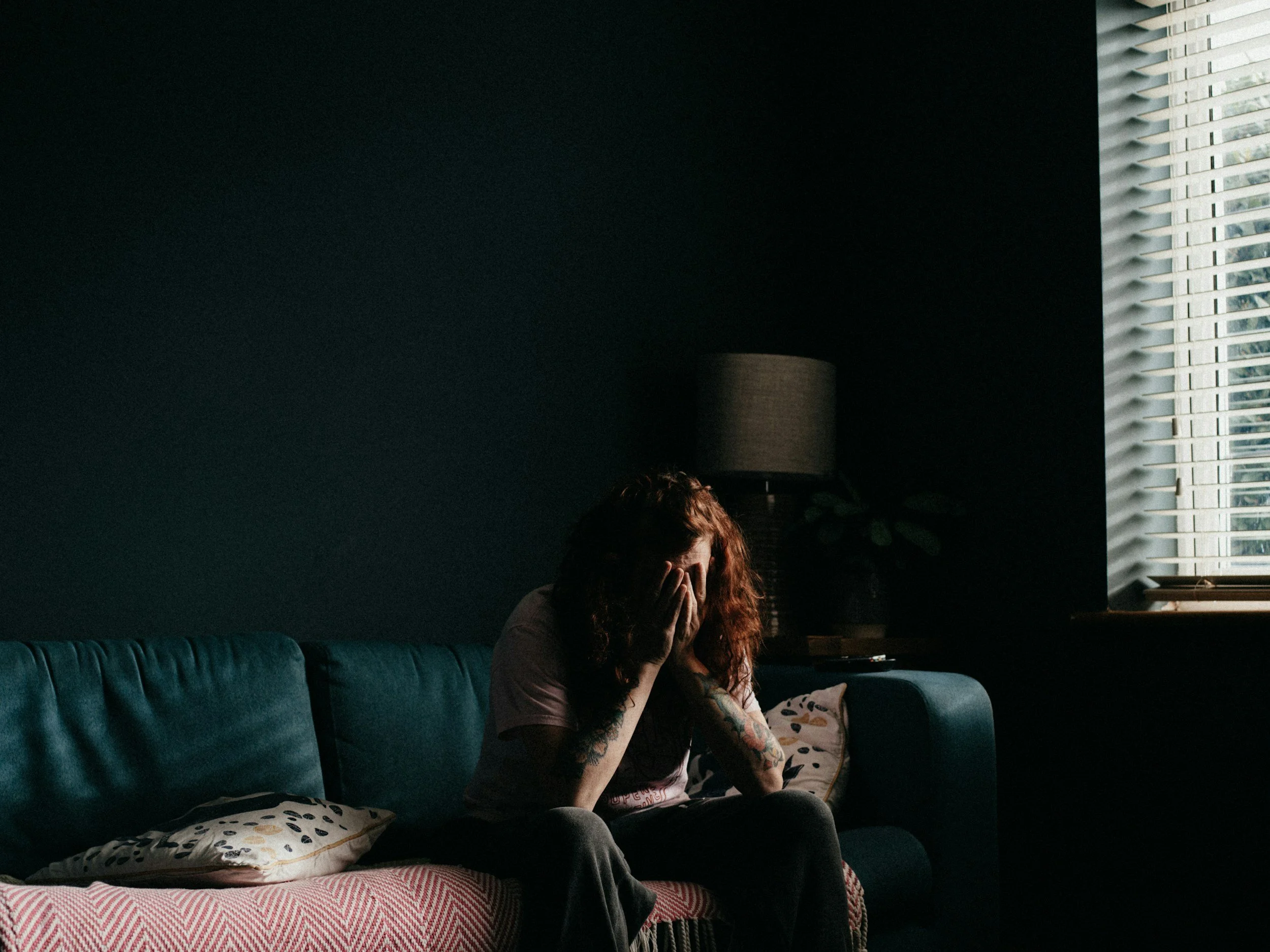
Therapy for the Betrayed Partner in Oklahoma City
You didn't do anything to deserve this.
Finding out your partner was unfaithful can knock the floor out from under you.
You may be replaying conversations, questioning things you thought you knew, checking phones, or unable to stop thinking about details you wish you didn't know. That's not you being "crazy" or "too much". It's a normal response to betrayal.
I work with betrayed partners individually to help you steady yourself, make sense of what happened, and figure out what you actually want. Not what you think you're supposed to want.
In-person in Oklahoma City · Online therapy throughout Oklahoma
You may be wondering:
Why can't I stop thinking about it?
Is it normal to want to know every detail?
Am I overreacting?
How do I even look at my partner right now?
Do I have to decide whether to stay or leave right now?
Will I ever be able to trust again? Or anyone, not just them?
Is what I'm feeling betrayal trauma, or is something wrong with me?
Do I tell anyone about this? If so, who?
Am I supposed to forgive and move on?
What do I do with this anger I have never felt before?
What betrayal trauma actually feels like:
Discovering an affair doesn't just hurt, for many people it produces symptoms that look a lot like trauma: intrusive images or thoughts that show up uninvited, a startle response to your partner's phone buzzing, trouble sleeping, difficulty concentrating at work, and a strange whiplash between moments of feeling okay and moments of being completely flattened by a memory or a detail.
You might find yourself needing to know exactly what happened, when, and how, not out of morbid curiosity, but because betrayal shatters your sense that you understood your own reality. Piecing together the timeline is often an attempt to rebuild a coherent story you can stand on again.
None of this means something is wrong with you. It means something genuinely traumatic happened to you, and your nervous system is responding accordingly. Betrayal trauma has its own shape and its own timeline. It isn't something you can think your way out of on a schedule, but it does respond to the right kind of support.
What therapy looks like for you
-
01. Stabilize
We start by helping you get your footing back. Often, that means managing the intrusive thoughts, the sleep loss, the constant checking, and the moments that hijack your whole day. You can't think clearly about your relationship while you're in a constant state of alarm, so this comes first.
-
02. Understand
Once you're steadier, we work on making sense of what happened, at the pace that's right for you. That might mean sitting with hard details, or it might mean learning how to stop the details from running the show. There's no requirement to minimize what happened, and no requirement to stay stuck reliving it forever.
-
03. Decide
With more clarity and less panic driving the process, you can start to genuinely weigh whether you want to work toward rebuilding the relationship, need more time and distance to think, or are ready to move toward ending it. This isn't a decision I make for you, and it isn't one you have to make on a deadline.
-
04. Rebuild, if that's the direction
If you choose to stay and your partner is willing to do the work, the next phase is slower: restoring trust, safety, and real connection. This happens on your terms, not just theirs.
This individual work can happen whether or not your partner is in therapy, and whether or not the two of you have decided to stay together. It's support for you, regardless of where the relationship ends up.
You don't have to know yet.
You don't have to decide whether you're staying or leaving to start therapy.
Many betrayed partners come in not because they've made a decision, but because they can't think straight enough to make one. That clarity tends to come through the process, not before it.
Frequently Asked Questions
-
Yes. Wanting the full timeline, the messages, the "why" is one of the most common responses to discovering infidelity. It usually comes from a need to rebuild a coherent, trustworthy picture of your own life after betrayal made everything feel unreliable. In therapy, we work on getting you what you actually need to feel grounded, without letting the search for details become its own source of re-traumatization.
-
No. There's no fixed timeline for healing from betrayal, and comments like this, however well-intentioned, usually reflect the other person's discomfort more than anything about your healing. Betrayal trauma tends to move in waves, not a straight line: weeks of feeling more stable followed by a hard day that seems to come from nowhere. That pattern is normal, not a sign you're something wrong.
-
Checking behaviors almost always come from anxiety, not distrust of yourself. They're an attempt to restore a felt sense of safety and control after that sense was taken from you without your consent. Telling yourself to "just stop" rarely works, because it doesn't address the anxiety underneath it. Therapy focuses on that underlying anxiety directly, so the urge to check loses its grip rather than just being white-knuckled through.
-
Yes! Most people start here. You don't need to know your relationship's outcome to begin working on your own stability, clarity, and sense of self. In fact, trying to force that decision before you're steady usually backfires.
-
Grief after a loss and grief after betrayal can look similar on the surface, but betrayal adds a specific injury: the person who hurt you was also the person you relied on for safety and truth. That combination of pain and the source of comfort being the same person is part of what makes betrayal trauma feel so disorienting, and why generic "breakup advice" often doesn't fit what you're going through.
-
No. That decision has to be yours, and it will hold up better if it's genuinely yours. My role is to help you get clear enough emotionally and practically so that whichever direction you choose, you're choosing it from stability rather than panic, and with confidence you can stand behind later.
-
Yes. Sessions are confidential, and online therapy throughout Oklahoma is available if privacy or logistics make in-person visits difficult. If discretion matters to you, how I contact you, how appointments are confirmed, just tell me, and we'll set that up in whatever way feels safest for you.